In any licensed premises, effective customer vetting isn't just good practice, it’s a legal and operational necessity. Ensuring your customers are appropriately checked before entry helps maintain a safer and more welcoming environment for everyone. Licensing SAVI provides resources to help you implement clear policies and best practices across three key areas: identification checks, crowd control, and search procedures.
Identification Checks: Know Who You’re Serving
One of the four Licensing Act 2003 objectives is to ‘Protect Children from Harm’. To meet this, all premises selling alcohol must have an age verification policy in place. Not having one is a criminal offence, potentially leading to prison time, unlimited fines, or even the loss of your licence.
A template Age Verification Policy is provided within the resources section of Licensing SAVI and can be adapted dependant upon a venues individual requirements and operating practices.
Key legal requirements include:
- Requiring ID with a photo, date of birth, and either a holographic mark or UV feature for anyone who appears under 18
- Ensuring all staff are trained and aware of the policy
- Displaying clear signage supporting age checks
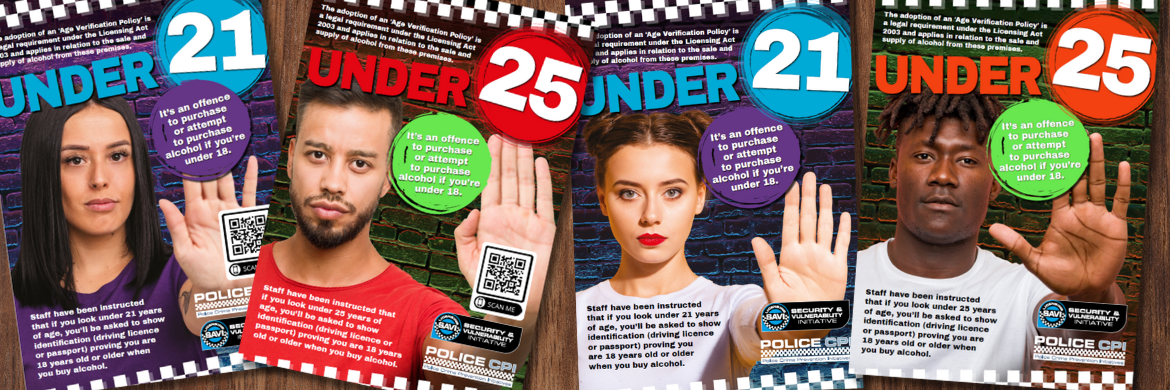
- Using Challenge 21/25 to encourage those who look under 21/25 to carry ID. Download our free age verification posters here
Worried about fake or borrowed ID? Refer to the Home Office guidance for what steps to take.
Crowd Control: Stay Safe and Organised
For some venues, managing how customers enter and exit your venue is crucial for both security and safety. Good crowd control:
- Prevents bottlenecks, allowing for smooth ID checks and screenings
- Reduces anti-social behaviour, pre-loading, and vulnerability to crimes like theft or drug dealing
- Keeps footways clear, avoiding community complaints and enforcement issues
Top tips for crowd control:
- Deploy an appropriate number of trained door staff
- Ensure the entrance is well-lit, monitored by CCTV, and spacious enough for safe operations
- Appoint a queue monitor to identify those who may be too intoxicated or otherwise unfit for entry before they reach the door
- For larger events, consult a qualified event safety manager to design crowd flows that reduce risks such as vehicle attacks or crushing incidents
Plan for smooth customer egress too. A Template Dispersal Policy is provided within the resources section of Licensing SAVI and can be used to inform training and raise staff awareness. Please also see our free 'Respect our Neighbours' poster which can be found on our Resources page.
Encourage customers to:
- Use well-lit routes and marshalled taxi ranks
- Choose legitimate taxi services or public transport
More guidance on ingress and egress planning is available via Protect UK.
Bag Checks & Search Policies: Rights, Respect, and Readiness
While not all venues are required to search customers, if it's a condition of your licence or operational policy, then a comprehensive and lawful search policy must be in place.
Important considerations:
- Security staff cannot legally search a person without consent. However, you can refuse entry if the customer declines a search
- Always display signage explaining your search policy and what staff are looking for (e.g. drugs, weapons)
- Searches must be courteous, non-discriminatory, and performed with customer consent
- Use random searches as a deterrent, ensuring fair selection without bias
- Male staff may ask female patrons to empty bags but should not conduct physical searches - female security staff should be available for this purpose
If searches are carried out:
- Record and store any seized items (especially drugs or weapons) securely, reporting to the police where necessary
- Consider PPE and training for staff conducting searches - especially when handling hazardous items like needles
- Collaborate with your security provider and responsible authorities to develop and review your policy
For industry-standard guidance, consult the BSIA Code of Practice for Security Searches.
By implementing robust customer vetting procedures, you're not just meeting legal obligations - you’re also creating a venue that’s safer for your patrons, your staff, and your community. Visit Licensing SAVI to access templates, posters, and more tools to support your success.