Safer Spaces: Crime Prevention Guidance for Licensed Premises
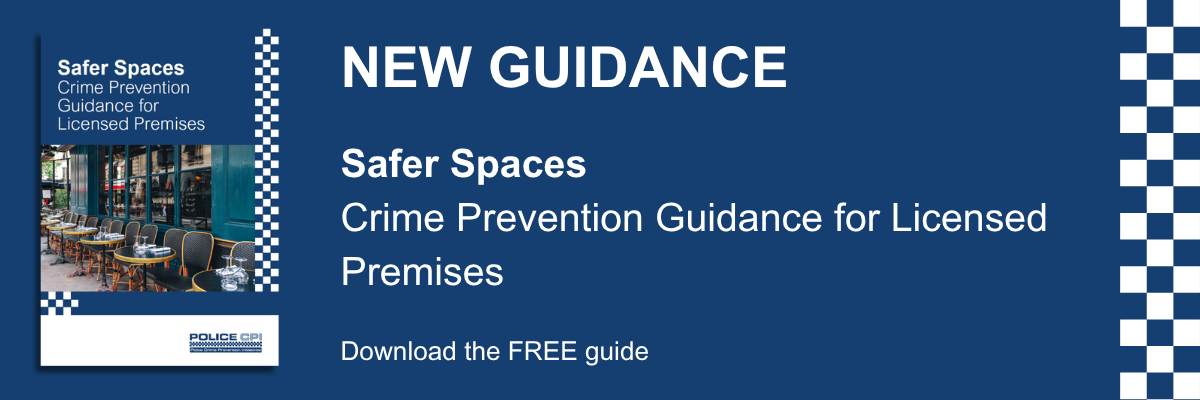
Police Crime Prevention Initiatives (Police CPI) is pleased to launch Safer Spaces Crime Prevention Guidance for Licensed Premises, a comprehensive new resource designed to support licensed premises in creating safer, more secure environments for staff, customers and local communities.
This guidance, developed through the Licensing Security and Vulnerability Initiative (Licensing SAVI), brings together policing expertise and recognised good practice into a single, practical document that supports those responsible for managing licensed premises across England and Wales.
The licensed trade plays a vital role within communities and the wider night-time economy, and Safer Spaces has been developed to help operators identify risks, strengthen safety measures and support effective venue management. The guidance provides practical advice across a range of areas including staff training and welfare, customer safety, preventing anti-social behaviour and violence (including knife crime, other weapons-related offences and serious violence), tackling drink spiking and drug misuse, supporting vulnerable people, emergency planning, physical security, CCTV, fire safety, Crime Prevention Through Environmental Design and effective incident management.
Designed to support both experienced operators and those new to the licensed sector, Safer Spaces promotes a proactive approach to crime prevention that helps businesses reduce risk, improve their response to incidents and create welcoming environments where people can socialise safely.
The guidance also highlights the importance of partnership working between licensed premises, policing, local authorities, businesses and communities, recognising the shared responsibility for creating safer spaces and reducing crime, disorder and vulnerability.
By bringing together practical advice, legislation, best practice and signposting to additional resources in one accessible publication, Safer Spaces Crime Prevention Guidance for Licensed Premises provides a valuable resource for the licensed sector and supports wider efforts to create safer night-time economies.